

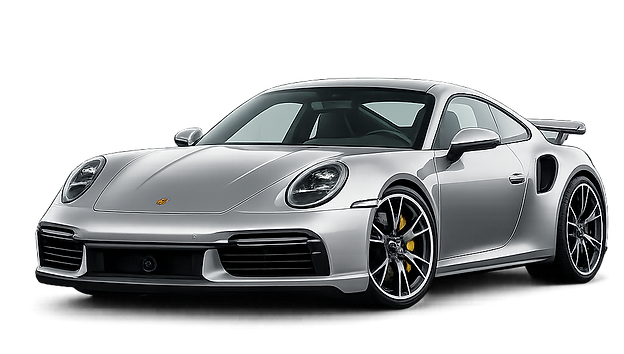
Naturally Aspirated
vs Turbocharged:
What Changed And
What Was Gained
Few topics divide Porsche 911 enthusiasts more than this:
Naturally aspirated or turbocharged?
For decades, the 911 built its identity on high-revving, naturally aspirated flat-six engines. Linear throttle response. Mechanical crescendo. Mechanical purity.
Then came the shift.
Beginning with the 991.2 Carrera generation, turbocharging became standard across the lineup.
Many called it the end of an era.
But was it?
This is not an emotional debate.
This is an engineering analysis of airflow, efficiency, throttle behavior, power delivery, thermal load, and long-term ownership implications.
Because what changed is only half the story.
What was gained matters just as much.
To better understand the evolution of the Porsche 911
Explore our full knowledge section →
How a Naturally Aspirated Flat-Six Works
A naturally aspirated (NA) engine relies solely on atmospheric pressure to fill its cylinders.
Air enters through intake runners.
No forced induction.
No compression by turbine.
Power output depends on:
Engine displacement
RPM ceiling
Volumetric efficiency
Cam timing
Exhaust scavenging
In classic 911 engines — especially air-cooled and Mezger-based units — performance came from revs.
Higher RPM = more combustion events per second.
This produced:
Linear throttle response
Immediate pedal-to-power connection
Predictable torque curve
Rising acoustic drama
The driving sensation was mechanical and progressive.
There is no boost threshold.
No torque surge.
Just airflow scaling with engine speed.
The Advantages of Naturally Aspirated Engines
Throttle Response
No turbo spooling delay.
Input equals output instantly.
Even though modern turbo lag is minimal, naturally aspirated engines still offer unmatched immediacy.
Acoustic Character
NA engines build sound with RPM.
The crescendo from 4,000 to 8,000+ rpm defines cars like:
997 GT3
991.1 Carrera S
458 Italia (outside Porsche)
Sound is directly linked to airflow volume — not turbine amplification.
Mechanical Simplicity
Fewer components:
No turbochargers
No intercoolers
Lower intake complexity
This historically reduced thermal stress in some cases.
Limitations of NA in Modern Era
However, naturally aspirated engines face constraints:
Emissions regulations
Noise regulations
Fuel economy targets
Power ceiling relative to displacement
To increase power without forced induction:
You must increase RPM or displacement.
Both raise mechanical stress and efficiency limitations.
The ceiling was approaching.
If you’re considering ownership, our guide on how to choose the right Porsche 911 gives you a complete overview of what to look for.
How to choose the right Porsche 911 →
The Turbocharged Transition
When Porsche introduced turbocharging to the Carrera lineup in the 991.2 generation, the goal was not drama.
It was efficiency.
Turbocharging compresses intake air using exhaust gases.
More air = more oxygen = more fuel = more power from smaller displacement.
The 3.0-liter twin-turbo replaced the 3.4 and 3.8 NA engines.
On paper:
More torque
Earlier torque delivery
Better fuel efficiency
Lower emissions
But what changed in sensation?
Turbo Torque Curve
Turbocharged engines produce peak torque much earlier.
Instead of building progressively toward redline, torque arrives low and flat.
This creates:
Strong mid-range acceleration
Effortless overtaking
Reduced need to chase high RPM
The car feels faster in daily driving.
Objectively, it is.
Modern Turbo Lag Myth
Early 930 Turbos were infamous for boost lag.
Modern twin-turbo systems:
Use smaller turbines
Employ variable geometry (in Turbo models)
Optimize exhaust routing
Use advanced engine management
Lag is now measured in fractions of a second.
For most drivers, it is imperceptible.
Thermal Complexity
Turbocharging increases:
Heat generation
Cooling system complexity
Oil temperature sensitivity
This required major evolution in cooling architecture.
Water-cooled engines became essential.
Intercooling became mandatory.
Engineering complexity increased — but so did control precision.
Driving Feel: What Was Lost — What Was Gained
What Was Lost
High-RPM crescendo drama in base Carrera models
The need to “work” the engine
The emotional climb toward redline
Turbocharged Carreras deliver torque so easily that chasing revs feels less necessary.
Some argue this reduces involvement.
What Was Gained
Massive real-world speed
Torque accessibility
Everyday drivability
Lower fuel consumption
Broader performance envelope
Modern 992 Carreras outperform older NA 911s decisively in acceleration.
Yet they remain comfortable daily machines.
GT Cars Remain Naturally Aspirated
Important distinction:
Porsche did not abandon NA entirely.
GT3 models remain naturally aspirated.
Why?
Because their mission is emotional purity and track fidelity.
Turbocharging optimizes efficiency and torque.
Naturally aspirated engines optimize high-RPM precision.
Porsche strategically split the philosophy.
Carrera = efficient turbo.
GT3 = emotional NA.
Looking for your own Porsche 911?
Explore available cars worldwide in our marketplace →
AI Insight
The transition from naturally aspirated to turbocharged Carrera engines was not driven by performance limitations alone.
It was driven by global emissions regulation and efficiency mandates.
However, Porsche used this constraint to improve real-world usability.
Turbocharging allowed smaller displacement engines to produce greater torque while reducing fuel consumption.
The perceived loss is primarily acoustic and psychological — not performance-based.
Data shows modern turbocharged Carreras outperform previous NA generations in nearly every measurable metric:
Acceleration
Torque output
Fuel efficiency
Emissions compliance
Yet emotional attachment to high-RPM NA engines remains strong due to sensory engagement.
The engineering reality is this:
Turbocharging expanded the 911’s performance envelope.
Naturally aspirated engines preserve its emotional heritage.
Both serve a purpose.