


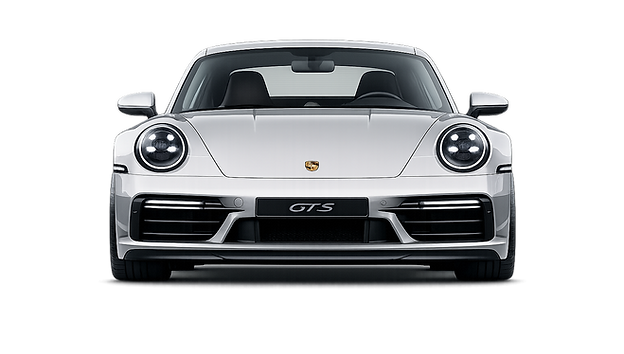
GTS, S
and Base
GTS, S and Base: The Subtle Hierarchy
The Porsche 911 hierarchy is not built on dramatic leaps.
It is built on calibrated engineering increments.
Base. S. GTS.
Each step modifies:
Power density
Thermal ceiling
Brake capacity
Suspension calibration
Market positioning
The differences are subtle. But they are deliberate.
To better understand the evolution of the Porsche 911
Explore our full knowledge section →
PLATFORM STRATIFICATION: WHAT ACTUALLY CHANGES
Power Output Evolution (997–992)
997.2
Base: 345 hp
S: 385 hp
GTS: 408 hp
Delta (S → GTS): +23 hp
991.1
Base: 350 hp, S: 400 hp, GTS: 430 hp, Delta (S → GTS): +30 hp
991.2 (Turbo era)
Base: 370 hp, S: 420 hp, GTS: 450 hp, Delta (S → GTS): +30 hp
992
Base: 385 hp, S: 450 hp, GTS: 480 hp, Delta (S → GTS): +30 hp
The delta is controlled. Not radical. Because Porsche protects:
Turbo hierarchy
GT hierarchy
Internal product spacing
Hardware vs Calibration
Important reality: In modern turbocharged generations (991.2 / 992):
GTS often uses:
Same turbo housings as S
Increased boost pressure
Modified ECU mapping
Standard sport exhaust
Optimized throttle response curve
Meaning:
GTS is frequently calibration + specification density, not a unique engine architecture.
Brake System Escalation
Typical pattern: Base
• Smaller discs
• Steel brakes standard
S
• Larger discs
• Higher thermal capacity
GTS
• Largest steel setup pre-GT
• PCCB often optioned at high take rate
Thermal resistance increases with each tier.
For repeated braking events (mountain / track use), this matters more than horsepower.
If you’re considering ownership, our guide on how to choose the right Porsche 911 gives you a complete overview of what to look for.
How to choose the right Porsche 911 →
CHASSIS CALIBRATION & THERMAL CEILING
The hierarchy is not just power.
It is thermal tolerance.
Suspension Mapping
Base:
• Comfort-biased PASM
• Greater compliance
S:
• Firmer damping curve
• Faster rebound control
GTS:
• PASM Sport (-10mm) standard
• Reduced body roll threshold
• Sharper transient response
This reduces: Pitch under braking, Squat under acceleration, Mid-corner float
Cooling Architecture
As you move up:
Radiator surface area increases.
Oil cooling capacity increases.
Intercooler efficiency improves (turbo era).
Why?
Because performance ceiling is not peak output.
It is sustained output.
Base = short burst optimized
S = extended dynamic use
GTS = aggressive sustained road performance
Tire Width & Mechanical Grip
Example (992 RWD):
Base: 295 rear
S: 305 rear
GTS: 305 rear (but different compound spec common)
Grip delta is subtle but meaningful. Mechanical footprint expands with tier.
MARKET STRUCTURE & DEPRECIATION LOGIC
Production Volume Influence
Base:
Highest production volume
Largest supply pool
S:
Core performance tier
Strong demand stability
GTS:
Lower production volume
High spec density
Strong enthusiast demand
Approximate 10-Year Retention Pattern (Historical Trend)
Base: ~55–65% retention
S: ~60–70% retention
GTS: ~65–80% retention
(Condition adjusted, non-GT, non-special models)
GTS often retains strongest % outside GT cars.
Why?
Because it bundles desirable options:
Sport Chrono
Sport exhaust
Wider body (generation dependent)
PASM Sport
Larger wheels
Spec density protects resale.
Psychological Buyer Segmentation
Base buyers:
• Rational entry logic
• Daily usability priority
S buyers:
• Performance balance
• Sweet-spot mindset
GTS buyers:
• Optimization mentality
• Want “maximum before GT”
• Often longer-term ownership
This influences liquidity. Liquidity protects value.
Why GTS Exists
It fills the gap between:
Comfort performance (S), Motorsport derivative (GT3)
Without:
Naturally aspirated GT cost, Allocation constraints, Track-biased compromise, It monetizes calibration.
STRUCTURAL COMPARISON TABLE (REFERENCE SUMMARY)
Category
Base – Platform integrity
S – Performance expansion
GTS – Specification optimization
Power Density
Base – Conservative
S – Elevated
GTS – Maximum pre-GT
Brake Capacity
Base – Road bias
S – Aggressive road
GTS – Near track tolerance
Suspension
Base – Comfort tuned
S – Sport tuned
GTS – Sport + lowered
Thermal Ceiling
Base – Short burst
S – Sustained dynamic use
GTS – High sustained load
Production Volume
Base – High
S – Medium-high
GTS – Lower
Resale Stability
Base – Moderate
S – Strong
GTS – Often strongest (non-GT tier)
Looking for your own Porsche 911?
Explore available cars worldwide in our marketplace →
AI Insight
The 911 hierarchy is not emotional engineering.
It is margin engineering.
Base establishes platform value.
S increases measurable performance delta.
GTS increases option density and perceived completeness.
The performance difference between S and GTS is measurable.
The market difference is psychological.
That is why GTS often holds stronger resale.