

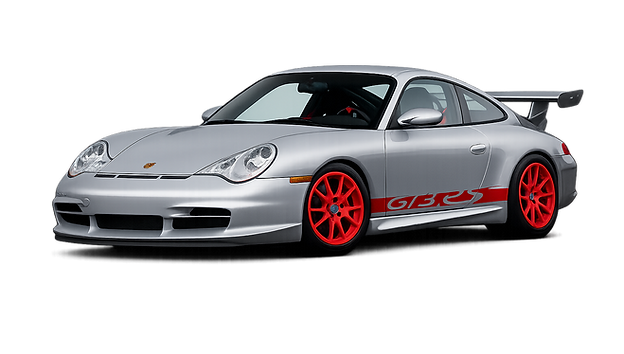
Which Porsche
911 Models
Hold Value Best?
Data & Market
Analysis
The Porsche 911 is often described as “safe money.”
But safety is relative.
Some 911s depreciate 40%.
Some stabilize after five years.
Some double.
Some never recover.
Understanding resale reality requires separating myth from measurable behavior.
This is a generational and variant-level analysis of what actually holds value — and why.
To better understand the evolution of the Porsche 911
Explore our full knowledge section →
Depreciation Phases Across Generations
Nearly every modern 911 follows a three-phase curve:
Phase 1 — Initial Depreciation (0–5 Years)
Typical decline:
15–35% depending on variant and market cycle.
Drivers:
• New model launch
• Leasing returns
• Warranty expiry psychology
Turbo and high-spec Carreras often drop fastest in percentage terms due to higher entry price.
Phase 2 — Stabilization (6–12 Years)
At this stage:
• Market finds equilibrium
• Enthusiast buyers enter
• Depreciation slows dramatically
Examples historically:
996 Carrera
997.1 Carrera S
991.1 Carrera
These models often plateau rather than collapse.
Phase 3 — Selective Appreciation (12+ Years)
Not all models enter this phase.
Appreciation historically favors:
• RS variants
• Manual GT3
• Low-production special editions
• Air-cooled icons
Standard Carreras rarely enter true appreciation.
They stabilize.
GENERATIONAL VALUE PATTERNS
964 (1989–1994)
Long-term trend:
Strong appreciation.
Drivers:
• Analog appeal
• Limited production
• Air-cooled narrative
However, entry prices are already high.
Future growth may normalize.
993 (1994–1998)
Peak air-cooled desirability.
Historically strong value retention.
RS and Turbo variants show highest resilience.
Standard Carreras:
Stable but not explosive.
996 (1999–2005)
Initially heavy depreciation.
Now:
Selective recovery in GT and rare variants.
Base Carreras:
Plateaued for years.
Recently modest upward pressure due to affordability entry point.
Lesson:
Lowest generation reputation does not mean zero future value.
997 (2005–2012)
One of the most balanced resale performers.
Manual GT3 and GT3 RS:
Strong long-term.
997.2 manual Carreras:
Increasing demand due to “last hydraulic steering” narrative.
991 (2012–2019)
Still within depreciation window.
Manual 991.1 GT3 Touring:
High retention.
991.2 Carrera:
Still adjusting toward stabilization phase.
992 (2019–present)
Too early for long-term curve.
Pandemic pricing distortion complicates data.
Long-term pattern likely similar to 991:
High initial values → moderate correction → stabilization.
If you’re considering ownership, our guide on how to choose the right Porsche 911 gives you a complete overview of what to look for.
How to choose the right Porsche 911 →
Variant Tier Analysis
Tier 1 — RS / Ultra-Limited
Examples:
GT3 RS, 911 R, Speedster (select years)
Behavior:
• High entry price
• Limited supply
• Collector premium
Volatility:
High short-term. Strong long-term resilience.
Tier 2 — GT3 / Motorsport-Derived
Behavior:
• Strong demand floor
• Manual premium
• Track credibility
These models show:
Lowest long-term percentage loss relative to MSRP.
Tier 3 — Turbo / GTS
Behavior:
• Strong performance appeal
• Broader production
• Luxury-performance hybrid positioning
Depreciate faster initially.
Stabilize reliably.
Rarely speculative.
Tier 4 — Carrera (Base / S)
Behavior:
• Largest production
• Most liquid market
• Lifestyle-driven demand
Depreciation follows premium sports-car curve.
Value stability depends heavily on:
Spec
Condition
Transmission
Data Drivers Beyond Model Name
Production Volume
Lower supply does not guarantee appreciation.
But supply + narrative + purity often does.
Example pattern:
Low-volume + manual + last-of-generation = resilience.
Transmission Premium
Manual premium observable in:
• 997.2
• 991.1 Touring
• Early GT3
But PDK dominance means:
Manual scarcity may increase long-term desirability.
Not universal.
Variant-specific.
Spec Sensitivity
Spec influences liquidity more than headline price.
High-demand options:
• Bucket seats
• Carbon ceramics
• Sport Chrono
• Paint-to-sample
Liquidity reduces downside risk.
Cars that sell quickly hold perceived value better.
Mileage Bands
Observed resale behavior suggests:
0–5,000 km cars:
Speculative premium.
10,000–40,000 km cars:
Market sweet spot.
80,000+ km:
Value flattening but slower liquidity.
Extremely low mileage does not guarantee better long-term return.
MARKET CYCLE FACTORS
911 values are influenced by:
• Interest rates
• Macroeconomic liquidity
• Collector sentiment
• Regulatory changes (ICE phase-out narratives)
• Motorsport success cycles
Pandemic period (2020–2022):
Artificial inflation.
Correction (2023–2025):
Normalization, not collapse.
LONG-TERM HOLD ANALYSIS (10–20 Years)
Historically, the safest long-term ownership strategies:
• Buy during stabilization phase
• Avoid peak hype entry
• Choose clean, documented examples
• Avoid extreme speculative premiums
The best-performing owners often:
Buy for 10+ years
Drive moderately
Maintain meticulously
Sell into renewed generational interest cycle
Looking for your own Porsche 911?
Explore available cars worldwide in our marketplace →
AI Insight
The Porsche 911 does not behave like a speculative asset.
It behaves like a durable enthusiast asset.
Most 911s:
Depreciate modestly
Stabilize
Offer lower total cost of ownership than rival exotics
Selective variants appreciate.
But timing, entry price, and emotional alignment matter more than speculation.
The safest financial 911 is rarely the most hyped one.